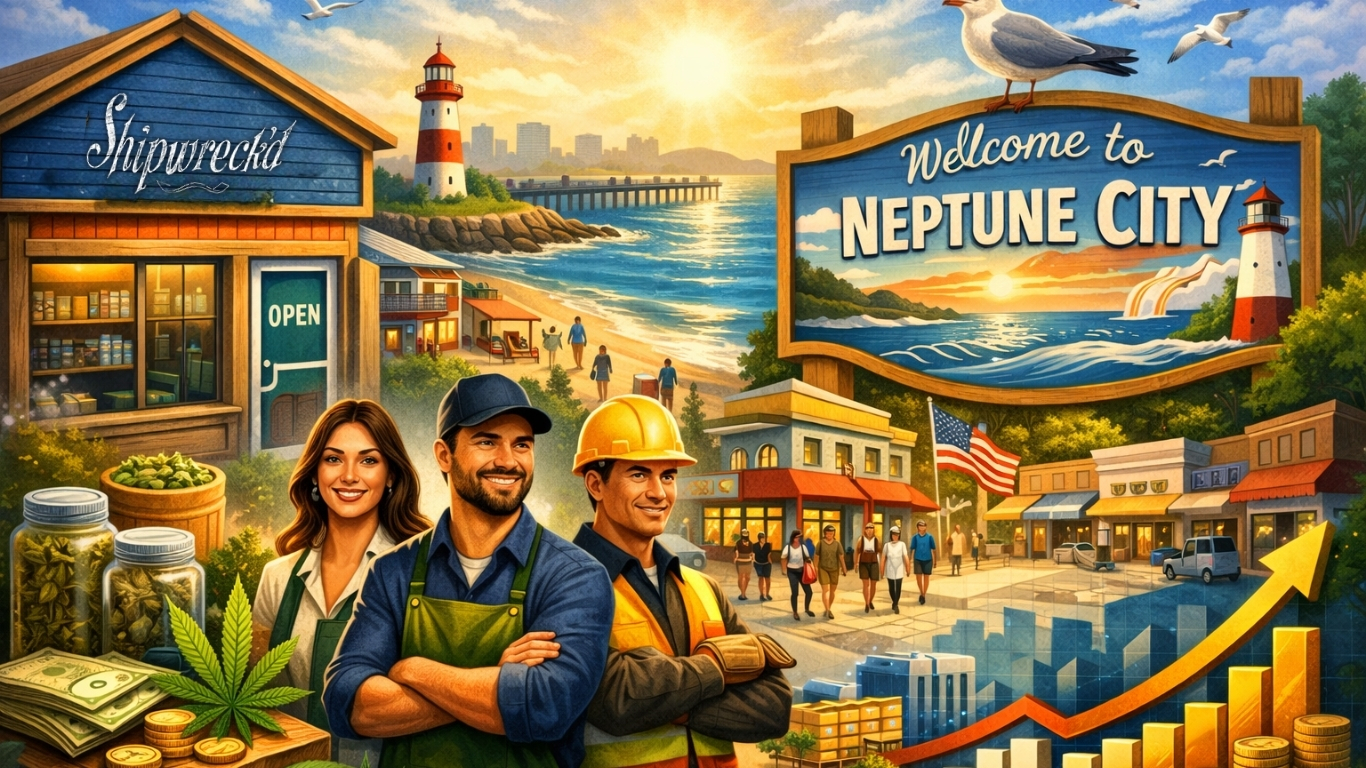
How Dispensaries Are Shaping Neptune City’s Local Economy
The arrival of cannabis dispensaries in Neptune City represents more than just a new retail option for consumers—it marks a transformative shift in the local economic landscape. As communities across New Jersey embrace the regulated cannabis market, coastal towns like Neptune City are experiencing firsthand the multifaceted economic benefits that legal cannabis businesses bring to their neighborhoods.
Disclaimer: This article is for educational and informational purposes only and does not constitute medical, legal, or financial advice. The information presented reflects current research and industry trends regarding the economic impact of cannabis dispensaries. Cannabis products are intended for adults 21 and older. Always consult with qualified professionals regarding personal health, legal, or financial matters.
The Economic Ripple Effect of Cannabis Legalization in New Jersey
Since New Jersey launched recreational cannabis sales in April 2022, the state’s market has grown exponentially. New Jersey’s cannabis market surpassed $1 billion in combined medicinal and recreational sales in 2024 alone, with more than 190 licensed dispensaries now operating across the state. This remarkable growth demonstrates the substantial economic potential that legal cannabis brings to local communities.
For Neptune City, a tight-knit coastal community in Monmouth County, the presence of dispensaries like Shipwreck’d creates economic opportunities that extend far beyond the dispensary walls. The cannabis industry generates revenue streams through direct sales, employment opportunities, and tax contributions that support public services and infrastructure improvements.
Job Creation and Employment Opportunities
One of the most immediate and visible economic impacts of cannabis dispensaries is job creation. The cannabis industry requires a diverse workforce spanning multiple skill levels and professional backgrounds. From cultivation specialists and quality control technicians to retail budtenders, security personnel, and administrative staff, dispensaries create employment opportunities that benefit local residents.
Research consistently demonstrates that cannabis legalization leads to measurable employment growth. Studies examining the impact of recreational cannabis sales found associations with decreased unemployment rates and increased employee numbers, with particularly strong effects in manufacturing sectors. In Colorado, one of the first states to legalize recreational cannabis, the industry created thousands of jobs across the supply chain.
For Neptune City residents, dispensaries like Shipwreck’d offer accessible career pathways in a growing industry. These positions provide competitive wages and opportunities for professional development, contributing to household income stability and reduced unemployment in the area. The leadership at Shipwreck’d, guided by decades of healthcare expertise, emphasizes employee training and development, ensuring staff members can provide knowledgeable guidance to customers while building valuable career skills.
Tax Revenue Supporting Community Development
Cannabis sales generate substantial tax revenue for both state and local governments. New Jersey’s taxation structure includes state sales tax on recreational cannabis, Social Equity Excise Fees, and optional local transfer taxes that municipalities can levy on cannabis sales.
New Jersey municipalities that allow cannabis dispensaries can impose a local transfer tax of up to 2% on recreational cannabis sales. This revenue directly benefits local communities, providing funding for essential services, infrastructure improvements, educational programs, and public safety initiatives. Towns across New Jersey that welcomed dispensaries in 2022 reported local cannabis tax revenues ranging from $150,000 to over $1 million in the first year alone.
Beyond municipal taxes, state-level cannabis tax revenue supports broader social equity programs designed to benefit communities disproportionately affected by previous cannabis prohibition. Through Social Equity Excise Fees, New Jersey has collected millions of dollars designated for education, economic development, and social services in impact zones—areas with higher unemployment rates, crime indexes, and historical marijuana arrest rates.
Property Values and Commercial Development
Contrary to initial concerns about cannabis dispensaries negatively affecting neighborhoods, research indicates that legal cannabis retail actually has positive effects on property values. Studies examining housing markets in Denver, Colorado found that the introduction of dispensaries within a half-mile radius of homes increased property values by approximately 7.7 percent on average.
This trend reflects broader economic revitalization effects. Dispensaries bring increased foot traffic to commercial areas, which benefits neighboring businesses including restaurants, retail shops, and service providers. The presence of a well-run dispensary signals to potential investors and business owners that a community is open to economic innovation and development.
For Neptune City, a town with deep roots as a seaside community, the addition of regulated cannabis retail complements the area’s existing appeal to both residents and visitors. Shipwreck’d’s coastal-themed branding and community-focused approach align with Neptune City’s character while attracting consumers who may also patronize other local businesses.
Supporting Ancillary Industries and Local Suppliers
The economic impact of cannabis dispensaries extends beyond direct employment and tax revenue. The industry supports numerous ancillary businesses including security companies, packaging suppliers, marketing agencies, legal services, accounting firms, construction contractors, and technology providers.
When dispensaries prioritize local sourcing and partnerships, they amplify their positive economic impact on the community. Shipwreck’d’s commitment to curating high-quality products includes relationships with suppliers and brands, many of which operate within New Jersey. This approach keeps more economic activity within state and local economies rather than flowing to out-of-state corporations.
The Tourism and Hospitality Connection
Cannabis retail can contribute to local tourism and hospitality sectors. While Neptune City already attracts visitors due to its proximity to Asbury Park and the Jersey Shore, the presence of legal cannabis dispensaries adds another dimension to the visitor experience.
Cannabis tourism has emerged as a growing market segment in states with legal recreational sales. Visitors interested in exploring legal cannabis culture contribute to local economies through hotel bookings, restaurant visits, and shopping at local businesses. For coastal communities like Neptune City, cannabis retail can complement existing tourism infrastructure and extend visitor stays.
Shipwreck’d’s welcoming, education-focused approach makes the dispensary an accessible destination for both seasoned cannabis consumers and those new to legal cannabis. The knowledgeable staff, diverse product selection, and coastal atmosphere create an experience that reflects Neptune City’s unique character.
Addressing Initial Community Concerns
The introduction of cannabis dispensaries into communities often raises questions about potential negative impacts such as increased crime, traffic congestion, or changes to neighborhood character. However, extensive research has examined these concerns and found them largely unfounded.
Studies specifically evaluating crime rates near dispensaries have found no evidence of increased criminal activity. In fact, some research suggests that operating dispensaries may actually reduce certain types of crime in surrounding areas. Well-regulated dispensaries typically feature robust security measures, including surveillance systems, secure entry protocols, and trained security personnel—all of which contribute to safer commercial environments.
Traffic concerns also tend to be minimal in practice. Cannabis retail operates similarly to other retail businesses in terms of customer flow, and municipalities can implement appropriate zoning and parking requirements to manage any impacts.
Social Equity and Community Investment
A crucial component of New Jersey’s cannabis legalization framework is its emphasis on social equity. The state’s Cannabis Regulatory, Enforcement Assistance, and Marketplace Modernization (CREAMM) Act prioritizes supporting communities and individuals negatively affected by previous cannabis prohibition.
Social Equity Excise Fees collected from cannabis sales fund programs that address historical inequities, including grants and loans for social equity businesses, workforce development programs, educational initiatives, and reentry support for individuals with cannabis-related convictions.
This approach ensures that the economic benefits of cannabis legalization reach beyond simple commerce to address broader social justice concerns. For Neptune City and surrounding areas, these investments can support community development initiatives that improve quality of life for all residents.
Shipwreck’d’s Community-Focused Approach
Shipwreck’d embodies the positive economic and social impact that responsible cannabis retailers can have on their communities. As Neptune’s premier cannabis dispensary, Shipwreck’d brings decades of healthcare expertise to the cannabis retail space, emphasizing customer education, product quality, and community connection.
The dispensary’s loyalty program rewards repeat customers while fostering ongoing relationships with local residents. Special discounts for first-time customers, veterans, seniors, and medical marijuana patients demonstrate Shipwreck’d’s commitment to accessibility and community support.
By curating a diverse selection of products including flower, edibles, vaporizers, and concentrates, Shipwreck’d serves a wide range of consumer preferences and needs. The emphasis on quality, safety, and transparency aligns with best practices in the regulated cannabis industry.
Understanding Cannabis Product Categories
For consumers new to legal cannabis or those exploring different product options, understanding the variety available at dispensaries like Shipwreck’d can enhance the shopping experience.
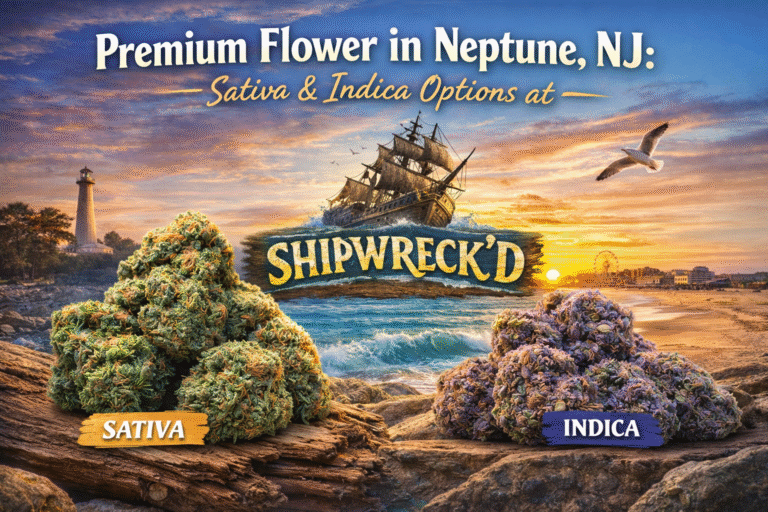
Sativa Flower: Sativa strains typically offer uplifting and energizing effects, often described as providing a “head high.” These strains are commonly chosen for daytime use, creative activities, and social situations. Sativa plants are characterized by their tall growth patterns and narrow leaves.
Indica Flower: Indica strains tend to produce relaxing and calming effects, often called a “body high.” These strains are frequently selected for evening use, relaxation, and supporting restful sleep. Indica plants are shorter and bushier with broader leaves.
Hybrid Flower: Hybrid strains combine characteristics of both sativa and indica genetics, offering balanced effects or leaning toward one side depending on the specific strain. Hybrids provide flexibility for consumers seeking tailored experiences.
Edibles: Cannabis-infused foods and beverages offer an alternative consumption method that doesn’t involve inhalation. Effects from edibles typically take longer to onset (30 minutes to 2 hours) but may last longer than inhaled cannabis.
Concentrates: These products contain higher concentrations of cannabinoids than flower, offering potent effects in smaller quantities. Common concentrate forms include wax, shatter, and oils.
Vaporizers: Vape products heat cannabis to release cannabinoids and terpenes without combustion, offering a potentially smoother experience than smoking.
Topicals: Cannabis-infused lotions, balms, and creams are applied directly to skin and are popular for localized use without intoxicating effects.
The Role of Terpenes and Quality Standards
Beyond cannabinoid content like THC and CBD percentages, terpenes play a significant role in cannabis experiences. Terpenes are aromatic compounds found in cannabis and many other plants that contribute to flavor profiles and may influence effects.
Shipwreck’d’s focus on quality includes attention to terpene profiles, helping customers find products that align with their preferences. The dispensary’s commitment to carrying only products that have passed rigorous testing ensures safety, consistency, and accurate labeling—critical factors for consumer confidence in the regulated market.
Looking Forward: The Evolving Cannabis Economy
As New Jersey’s cannabis market continues maturing, the economic impact on communities like Neptune City is expected to grow. Additional dispensaries coming online, increased product diversity, and growing consumer acceptance all contribute to market expansion.
Federal policy changes, including potential rescheduling of cannabis under the Controlled Substances Act, could further transform the industry by improving access to banking services, reducing tax burdens under IRS Section 280E, and enabling interstate commerce. Such changes would likely accelerate growth and increase economic benefits for local communities.
For Neptune City, the presence of established, community-focused dispensaries like Shipwreck’d positions the town to benefit from these evolving opportunities. The dispensary’s emphasis on education, quality, and customer care helps build the trust and community relationships essential for long-term success.
Frequently Asked Questions
How do cannabis dispensaries contribute to local economies?
Cannabis dispensaries contribute to local economies through multiple channels including job creation, tax revenue generation, increased property values, and support for ancillary businesses. Dispensaries employ diverse workforces, generate sales tax and excise tax revenue that funds public services, and attract foot traffic that benefits neighboring businesses. Research has shown that dispensaries can increase nearby property values and stimulate economic development in their communities.
What types of jobs do cannabis dispensaries create?
Cannabis dispensaries create employment opportunities across various skill levels and professional backgrounds. Positions include retail budtenders, store managers, security personnel, inventory specialists, administrative staff, and more. Beyond direct retail employment, the broader cannabis industry includes cultivation specialists, manufacturing technicians, quality control experts, compliance officers, marketing professionals, and logistics coordinators. These positions often offer competitive wages and opportunities for career advancement.
How does tax revenue from cannabis sales benefit Neptune City?
Tax revenue from cannabis sales benefits Neptune City through local transfer taxes that municipalities can levy on recreational cannabis transactions. This revenue supports community services, infrastructure improvements, public safety programs, and other municipal needs. Additionally, state-level cannabis taxes fund social equity programs that benefit communities across New Jersey, including workforce development, educational initiatives, and support for areas disproportionately affected by previous cannabis prohibition.
Do cannabis dispensaries increase crime in neighborhoods?
Extensive research has examined this concern and consistently found no evidence that legal, regulated cannabis dispensaries increase crime in surrounding areas. Studies have shown that dispensaries do not lead to higher crime rates, and some research suggests they may actually reduce certain types of crime nearby. Well-regulated dispensaries implement robust security measures including surveillance systems, secure entry protocols, and trained security personnel, contributing to safer commercial environments.
What is the difference between sativa and indica strains?
Sativa strains typically produce uplifting, energizing effects often described as a “head high,” making them popular choices for daytime use, creativity, and social activities. Indica strains tend to offer relaxing, calming effects often called a “body high,” frequently selected for evening use and relaxation. Hybrid strains combine characteristics of both, offering balanced effects or leaning toward sativa or indica depending on genetics. However, individual experiences can vary, and factors like terpene profiles and personal tolerance also influence effects.
How does Shipwreck’d support the Neptune City community?
Shipwreck’d supports the Neptune City community through employment opportunities, tax contributions, customer education, and accessible pricing through loyalty programs and special discounts. The dispensary’s leadership brings decades of healthcare expertise to ensure responsible, education-focused service. Shipwreck’d’s commitment to quality, transparency, and customer care helps build trust while contributing to the local economy. The dispensary’s loyalty program rewards local customers, and special discounts for veterans, seniors, and medical patients demonstrate community-focused values.
Conclusion: A New Chapter for Neptune City
The introduction of cannabis dispensaries represents a significant economic opportunity for Neptune City. Through job creation, tax revenue generation, property value appreciation, and support for ancillary businesses, dispensaries like Shipwreck’d contribute meaningfully to local economic vitality.
As New Jersey’s cannabis market continues evolving, communities that embrace responsible, regulated cannabis retail position themselves to benefit from sustained economic growth. The key to maximizing these benefits lies in supporting well-run, community-focused businesses that prioritize quality, education, and transparency.
Shipwreck’d’s coastal-inspired approach to cannabis retail reflects Neptune City’s unique character while serving both local residents and visitors. By combining decades of healthcare expertise with a commitment to customer education and product quality, Shipwreck’d exemplifies the positive role that cannabis dispensaries can play in community development.
Disclaimer: This article is for educational purposes only and does not constitute medical, legal, or financial advice. Cannabis is intended for adults 21 and older. Individual experiences with cannabis products may vary. Always consult with qualified healthcare professionals regarding personal health matters, and ensure compliance with all applicable state and local laws regarding cannabis use and possession. The economic impacts discussed reflect industry trends and research findings but may vary by location and over time.